
Hearing Testing & Evaluation
Hearing loss can be gradual and you may not notice the early signs of hearing loss. In fact, your family might be the first ones to notice your communication challenges. They might point out that you have a harder time hearing in conversations or that you’ve been turning up the volume on the TV.
We know that hearing helps you connect with loved ones and enjoy all your favorite sounds. At All About Audiology, we offer regular hearing testing to diagnose, manage, and treat hearing loss.
Learn
How Does Hearing Work?
Curious about how the ear and brain help you hear? This is how hearing works:
Outer and Middle Ear
It all starts when sound waves enter the ear canal and vibrate the eardrum. These vibrations get transmitted through the tiny bones in the middle ear. This amplifies the sound and sends it to the cochlea in the inner ear.
Inner Ear and Brain
The cochlea is filled with fluid and lined with thousands of hair cells. These cells move with the vibrations and create electrical signals. The signals are carried to the brain via the auditory nerve. Finally, the brain interprets these electrical signals as sounds, allowing us to understand language, appreciate music, and hear what’s happening around us.
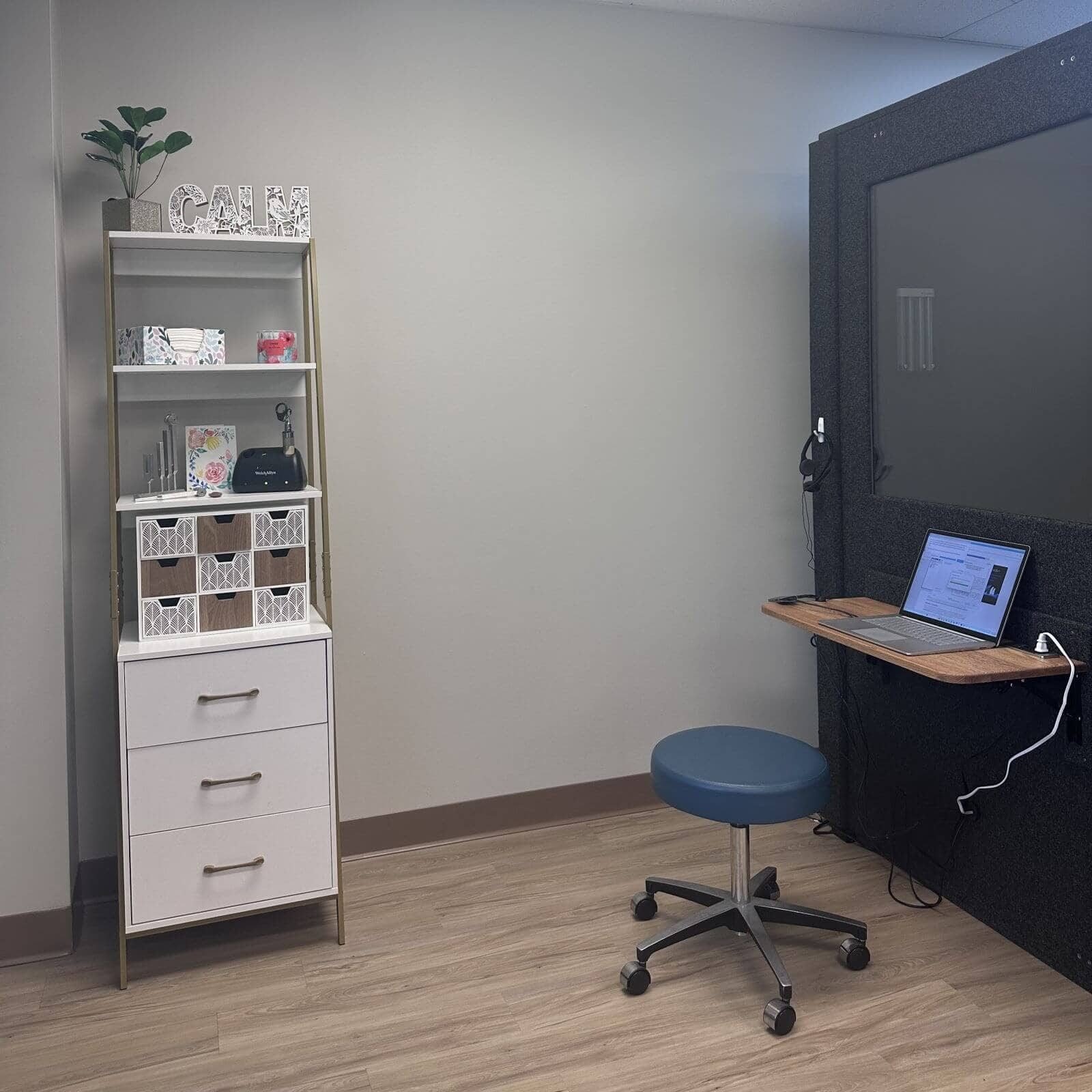 The sound booth at All About Audiology
Learn
Signs You May Need a Hearing Test
Some common signs of hearing loss include:
- Difficulty understanding words, especially against background noise or in a crowd.
- Frequently asking others to speak more slowly, clearly, and loudly.
- Needing to turn up the volume on the TV or radio.
- Pulling back from conversations and social activities.
When to Seek Professional Help
It’s important to book a hearing test if you notice any signs of hearing loss, no matter how mild. Finding out about your hearing loss early on will lead to better treatment. You should also book a hearing test if you notice any sudden or significant hearing loss.
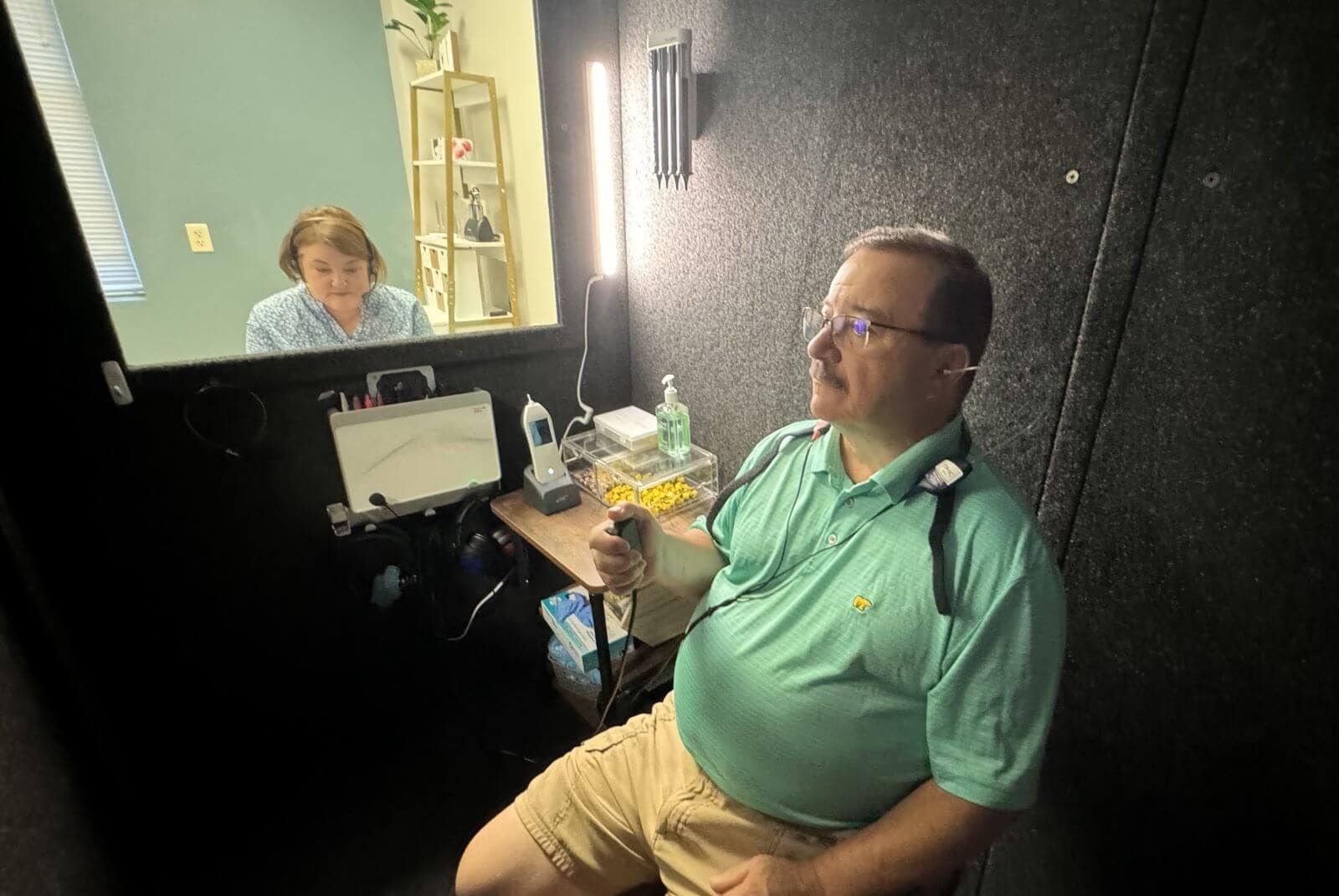 A patient wearing headphones inside the sound booth
Learn
Types of Hearing Tests
Our hearing tests are thorough and informative. Here are a few types of hearing tests we use to help you learn more about your hearing loss:
Pure Tone Audiometry
This test measures your ability to hear sounds of varying pitches and volumes. You’ll listen to tones through headphones, and identify the quietest sounds you can hear at different frequencies.
Speech Audiometry
This evaluation tests your ability to hear and understand speech. You’ll listen to spoken words at different volumes and pitches and repeat them back. This can help us determine your ability to understand speech in different environments.
Tympanometry
Tympanometry tests the movement of your eardrum in response to air pressure. It can identify issues with the middle ear that could affect hearing.
Learn
Our Hearing Evaluation Process
Initial Consultation and Patient History
It all starts with a detailed consultation and review of your medical and hearing history. When we understand your lifestyle, health conditions, and any previous hearing issues, we can give you personalized testing and treatment.
What to Expect During Your Hearing Test
During your appointment, you’ll complete various hearing tests appropriate for your age, health, and symptoms. We’ll explain tests thoroughly beforehand so you’ll know exactly what to expect.
What Comes Next
After your evaluation, we’ll discuss the results with you in detail. If you have hearing loss, we will explain the level of hearing loss you have, and recommend the best treatment options. This might include hearing aids, assistive listening devices, or further medical evaluations.

Reach Out Today
Book Your Next Hearing Test
Hearing care is an integral part of your overall healthcare. We understand the impact of hearing health on daily life, and we believe your hearing health is an important part of your overall health. That’s why we provide hearing tests and solutions to give you the best possible care. Contact us today to take the first step toward better hearing.