
Patient’s answers
No answers yet.
Your Tinnitus Visit
“Nobody else can hear it, but you hear it all the time”
This is the conversation Dr. Sanders has with every tinnitus patient. We’ll walk through it together, and ask a few questions along the way so your visit starts with the full picture.
Because “Learn to live with it” isn’t a plan.
Welcome back. Your answers are saved on this device. or .
About 15 minutes. Large type, one question at a time. Nothing is sent until you choose to send it at the end.
Chapter 1 · What tinnitus is
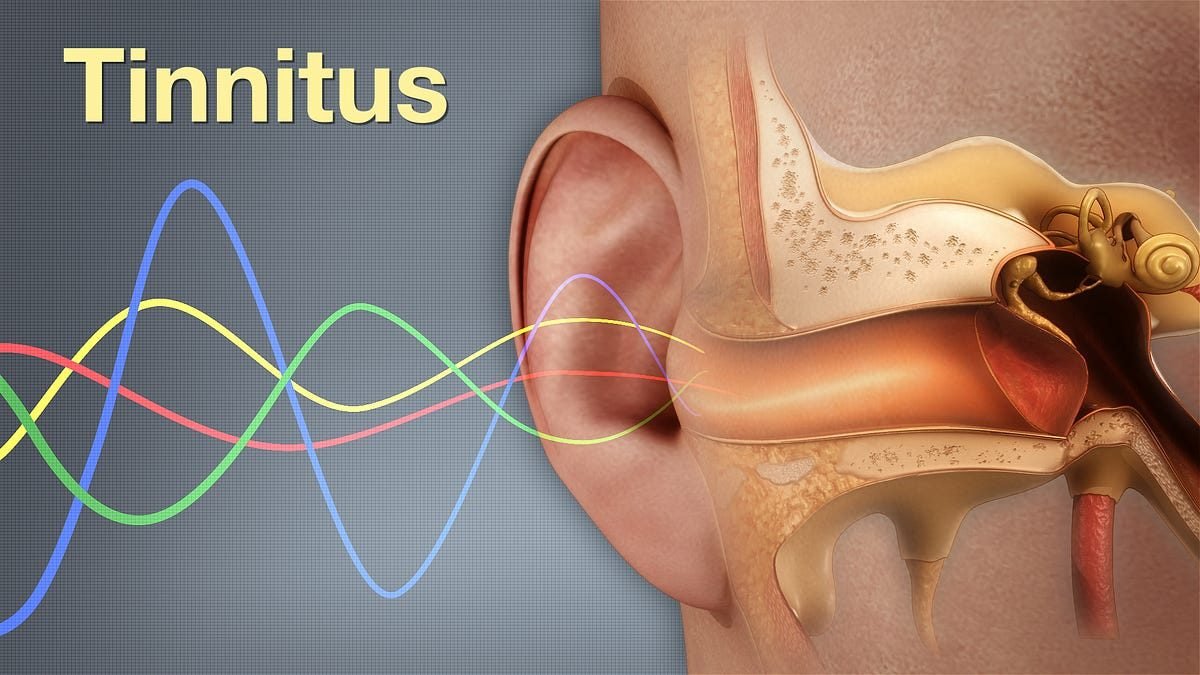
What is tinnitus?
“Tinnitus” is the medical term for hearing a sound in your ears or your head that no one else can hear. You may hear ringing, humming, buzzing, clicking or a whooshing sound. The sound may be soft or loud enough that you can’t hear anything else. It can affect one or both ears. Severe tinnitus can make it hard to sleep or focus. Tinnitus may go away within days or be a permanent issue.
Tinnitus isn’t a disease. It’s often a symptom of an underlying hearing loss. But many things can cause tinnitus. Treating the underlying condition may help. And there are ways to manage tinnitus and reduce its impact on your quality of life. (Definition from the Cleveland Clinic website)
Tinnitus is created by the brain to compensate for the loss of stimulus. For example…If your tinnitus is caused by your hearing loss,your brain may seek to recreate the sound loss resulting in tinnitus.
Part 1 · About you
First, a little about you
So Dr. Sanders can match this to your chart.
Part 2 · Your tinnitus
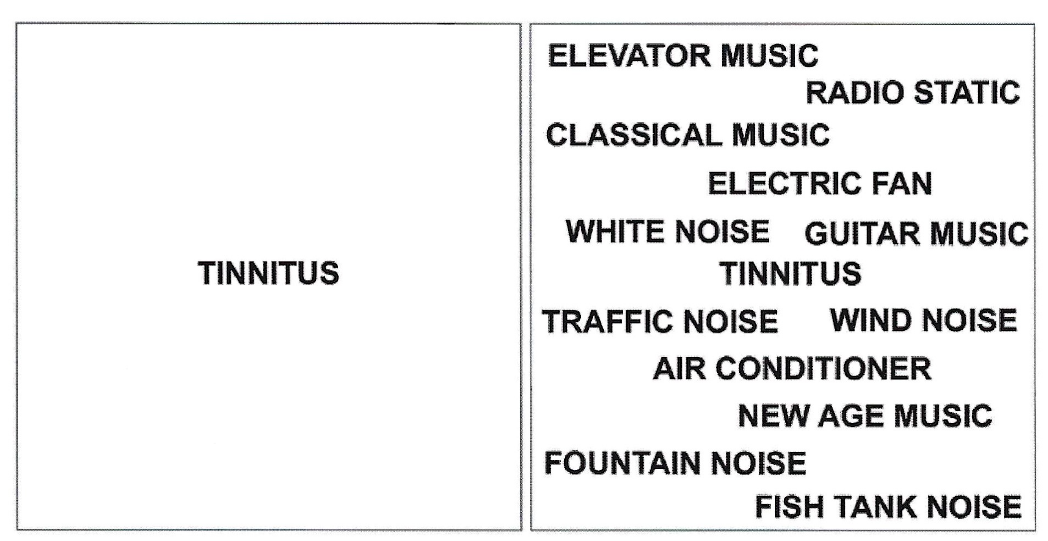
Tell us about the sound you hear
There are no wrong answers. Pick what feels closest.
Chapter 2 · Your appointment
A picture of your appointment
- 1Complete and or review diagnostic audiogram (your hearing test)
- 2Complete any extra testing needed for your tinnitus diagnosis
- 3Why do I have tinnitus… education regarding your tinnitus
- 4Treatment options that are available and that are best for your specific needs
- 5Establish your treatment plan

Chapter 3 · How we hear
How we hear
All sound is a wave or a vibration
Outer ear: The pinna or auricle is the outer visible part of the ear that helps to collect sound waves and sends them into the ear canal where they are amplified. At the end of the ear canal is the tympanic membrane, otherwise known as the eardrum. The sound waves cause the eardrum to vibrate.
Middle ear: The vibration of the ear drum gently vibrates the bones in the air filled middle ear cavity. These bones are the smallest bones in the human body. These bones are the malleus, incus and stapes and are collectively known as the ossicles. The vibration of the ossicles also helps to amplify sound as it moves to the inner ear. The middle ear also regulates the pressure in the ear because of the connection between the middle ear and Eustachian tube.
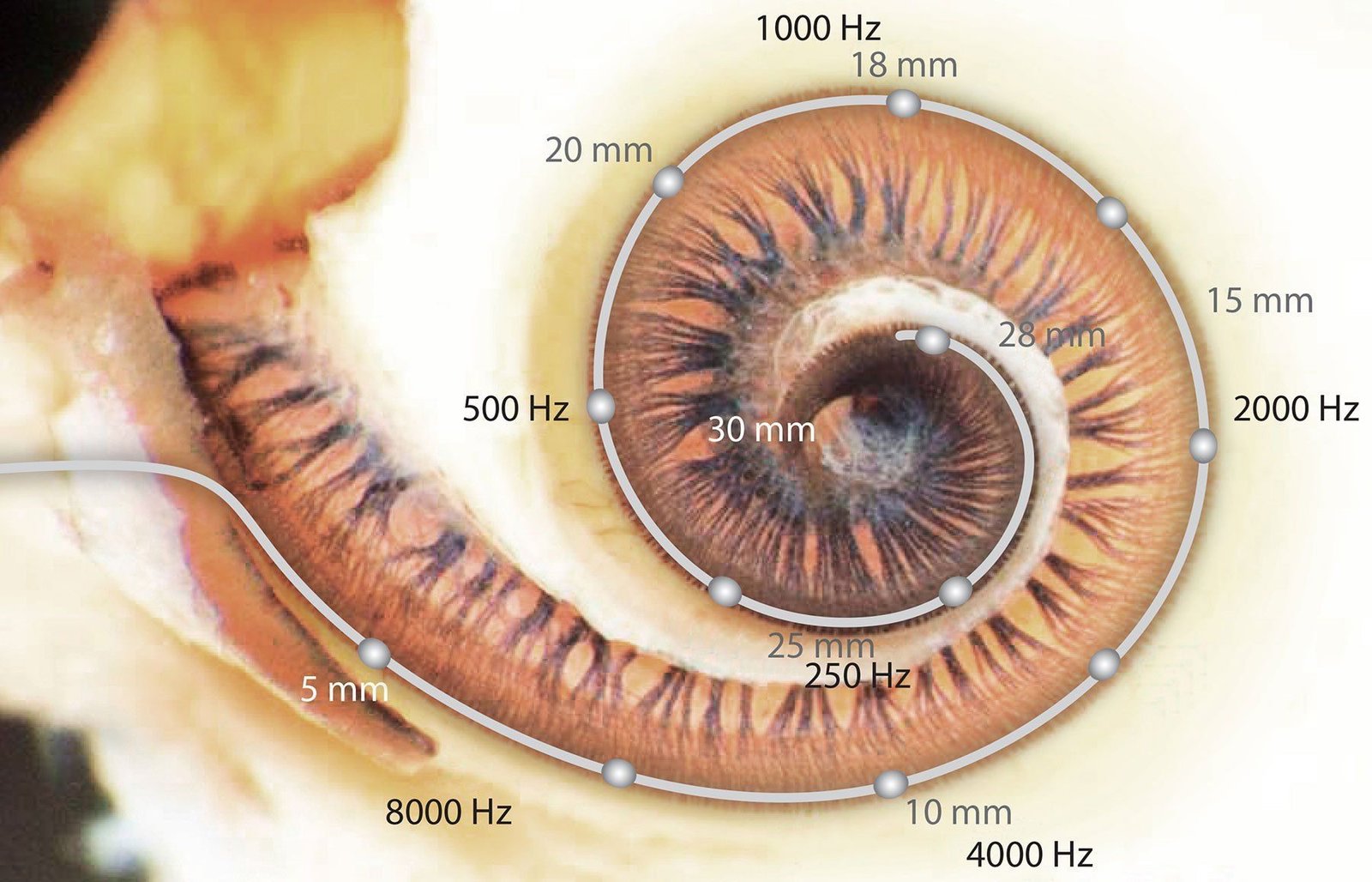
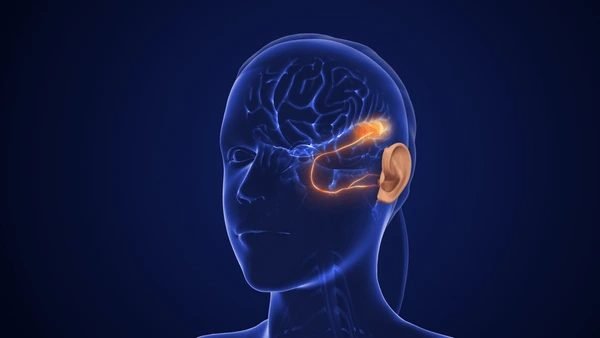
Inner ear: The sound waves enter the inner ear and then into the cochlea. The cochlea is a snail-shaped organ that is filled with fluid. As the fluid moves in response to the vibration from the middle ear 25,000 nerve endings are set into motion. These nerve endings transform the vibrations into electrical impulses that then travel along the eighth cranial nerve (auditory nerve) to the brain.
The cochlea is tonotopic, where sound is organized by frequency or pitch. Think of a piano keyboard, but instead of 88 keys, there are 25,000 “keys”.
The brain in the auditory cortex then interprets these signals, and that is how we hear.
We make sense of sound in our brain.
Part 3 · Your hearing
Your hearing history
Hearing loss and tinnitus often travel together.
Chapter 4 · Why tinnitus?
WHY tinnitus?
Subjective tinnitus is thought to be caused by abnormal neuronal activity in the auditory cortex. This activity results when input along the auditory pathway is disrupted or altered in some manner. This disruption may cause loss of suppression of intrinsic cortical activity and perhaps creation of new neural connections.
Some causes include:
- Hearing loss
- Exposure to extremely loud noise
- Sensori nerve disorders
- Natural aging process
- Stress
- Middle and outer ear issues (ear infections, earwax impaction)
On its own, tinnitus is not a sign of a serious medical problem.
Our Goal: Take tinnitus from bothersome to not bothersome
Because “Learn to live with it” isn’t a plan.
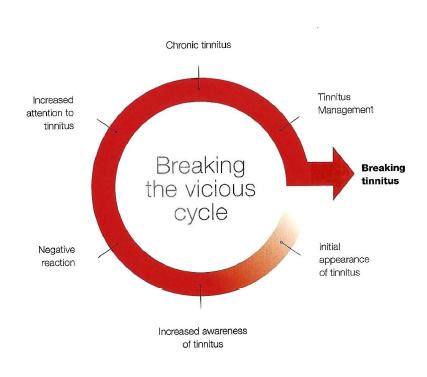
Stress can increase our tinnitus, tinnitus increases our stress, the increased stress increases our tinnitus…
Part 4 · Health & medications
Your health and medications
Some conditions and medicines can play a part. This helps Dr. Sanders rule things in or out.
Chapter 5 · The candle
The candle in a dark room
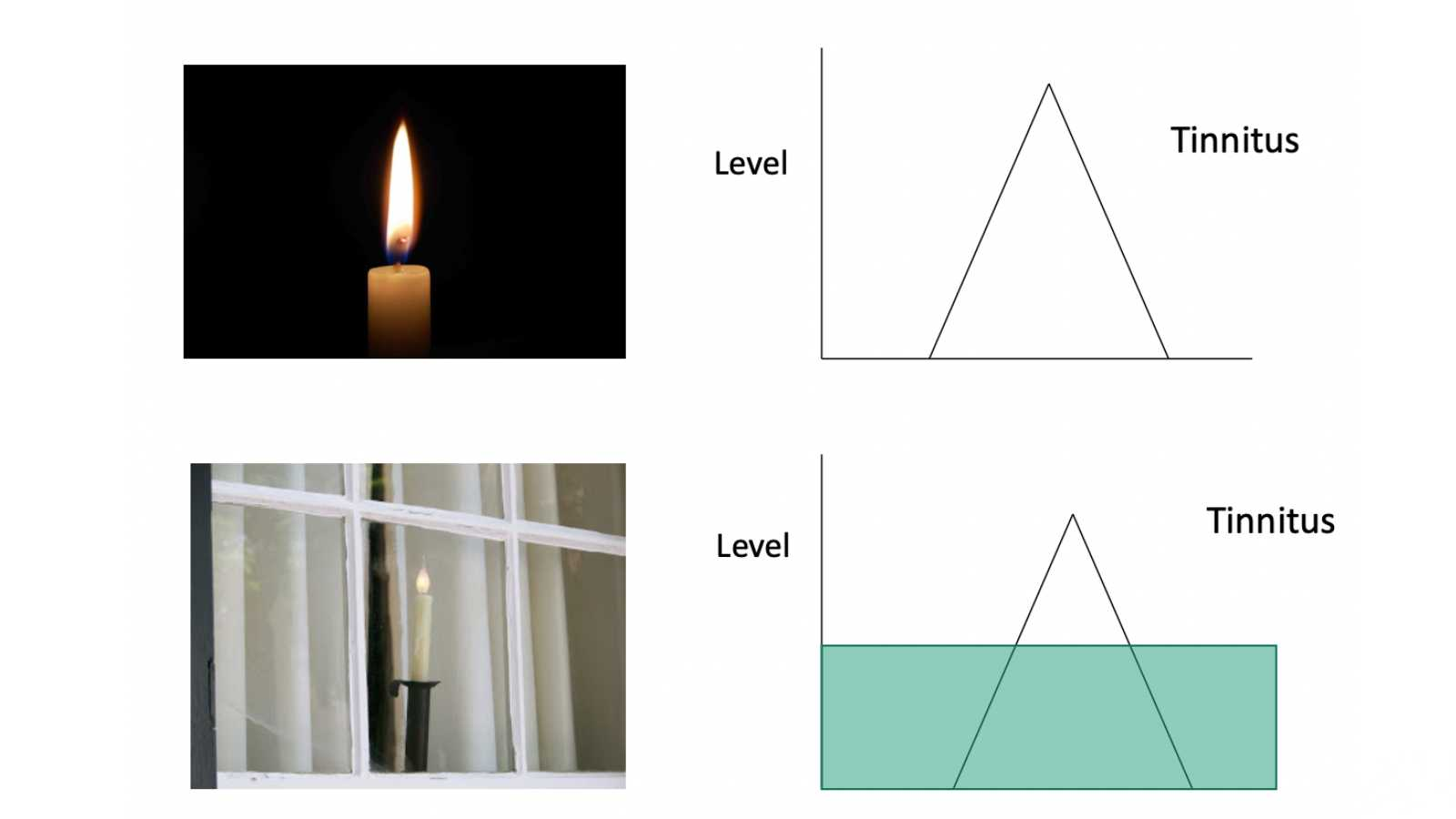
Tinnitus can seem louder when background sound is absent. This can be illustrated by thinking of a candle in a dark room. When the lights are on, we notice the candle, but only as part of the overall environment. If we turn off the lights, in a completely dark room, the flame appears bright and immediately captures attention. Keep in mind, its physical intensity has not changed, only the surrounding context has changed. In the same way, tinnitus is often perceived as louder in silence because there are fewer competing sounds.
If hearing loss is present, there is auditory deprivation taking place, which is mimicking “a dark room”.
The flame never changes. Only the room does.
Lights on · the candle is part of the roomLights off · the flame is all you see
Chapter 6 · Bothersome, or not
Why is tinnitus bothersome for some and not as much for others?
50 Million Americans experience tinnitus; however, only 20 million are bothered by it. Anyone can shift tinnitus from bothersome to not bothersome.
There are typically three things that must be present in order for tinnitus to reach and remain at a bothersome level.
Hearing loss
Hearing loss - even a mild hearing loss at very high frequencies can cause tinnitus
Stress
Stress - Stress has been proven to exacerbate tinnitus
- When we are stressed, everything becomes a reaction
- Stress increases tinnitus bother
- Relaxation decreases tinnitus bother
“An Amazing Personality”
- Very aware of environment around them
- Sometimes a perfectionist: sees a problem and looks to resolve it
- Same things that make them successful are the reason they are bothered by their tinnitus
Tinnitus is a benign body sensation that the brain misinterprets as something that is important for it to pay attention to. It can be unpleasant and bothersome, but it is benign.
We worry about the tinnitus that we are experiencing. Why?
The amygdala’s job inside of our brain is to take in information from the external world and take in sensations from the internal world and make a decision.
Is the tinnitus a danger? If so, Fight or Flight is triggered and our brain overreacts to the tinnitus.
The Haunted House metaphor…
Imagine entering a dark and unfamiliar house. Since it is dark, ordinary, sounds and shadows may be interpreted by our brains as signs of danger. Fear increases and tension and even rapid heartbeat may occur. The situation may begin to feel like a threat. Yet, this feeling of fear does not necessarily mean that there is a danger present. The objective reality of the situation remains unchanged regardless of how we perceive it.
Tinnitus is unique to each individual in terms of sound and severity. The brain may label the sound as harmful and may then fixate on the tinnitus sound.
Is the tinnitus unimportant? If so, it can be put into the background. The brain may choose to ignore it for some. The goal of the tinnitus becoming not bothersome is achieved.

Part 5 · Tinnitus Handicap Inventory
How much does your tinnitus affect you?
Twenty-five short questions. Answer Yes, Sometimes, or No. This is a standard scale your audiologist uses to measure how bothersome tinnitus is — and to measure change later.
Part 6 · Sleep, focus & stress
Sleep, focus, stress — and you
Stress and tinnitus feed each other. A few honest answers here shape the plan.
Chapter 7 · Treatment options
Treatment options
There are really 5 main branches to this. There are many intersections that involve more than one of the treatment options and there are sub options within all of these branches.
Become Educated…
No action must be taken at this point.
Hearing Aids…
This may be the best course of action, particularly if hearing loss is present. This can potentially help you with both the tinnitus and speech understanding ability at the same time.
-“How does this help tinnitus” you might be asking… Remember the candle analogy! We can “turn on the lights” by achieving sound in areas where your auditory cortex is being deprived.
- Are all hearing aids the same? Not when it comes to tinnitus. Some hearing aid manufacturers have spent more effort specific to tinnitus. Some have extended bandwidths. Some have Notch Therapy, Some use fractal tones. Some use multiple and even layered tinnitus masking options and sound therapy. Some consider stress relief.
Lenire…
- Research has shown that stimulating two nervous system points can be more effective than sound therapy alone. A clinical trial of 710 people with moderate or worse tinnitus had a significant reduction in severity after six weeks of Lenire versus six weeks of sound only.
- Lenire stimulates your ears with audio and tongue with mild pulses. The pulses can feel like soda bubbles. By stimulating the two nerves during a relaxing time, changes are being made in the brain at the same time.
- This requires the patient to use this for one half hour, twice daily.
- Lenire can improve quality of life, boost concentration and improve sleep.
Oto…
Relieve your tinnitus in 10 minutes per day
- Oto is a 12 week program that uses cognitive behavioral techniques (CBT) to change your perception of your tinnitus.
- Do a 10 minute audio session each day to learn to tune out tinnitus
- Sound therapy options are available
Biometrics…
- Monitor sleep, exercise and stress levels to observe and produce improvement in tinnitus
- Looking for time in bed as well as quality sleep using a wearable device.
- Looking for heart rate intervals
- Promotes self care such as increased relaxation and improved sleep


Part 7 · Goals & readiness
What would “not bothersome” look like for you?
Your treatment plan should be personal. Tell us what matters.
Chapter 8 · Conclusion
Time for your personal recommendations!
Let's work together to improve your quality of life by calming your tinnitus!
Because, “Learning to live with it” isn't a plan
One last step: review your answers and send them to All About Audiology, or print them for your visit.

Part 8 · Consent
Before you send
Your answers stay on this device until you choose to send them.
Your summary
Here’s what you’ll share with Dr. Sanders
Check it over. You can go back and change anything.
Sent. Thank you.
Your reference code is . Dr. Sanders will have your answers before your visit. If anything changes, just tell us when you arrive.
All About Audiology · 200 Banning Street, Suite 220, Dover, DE 19904 · (302) 738-8991